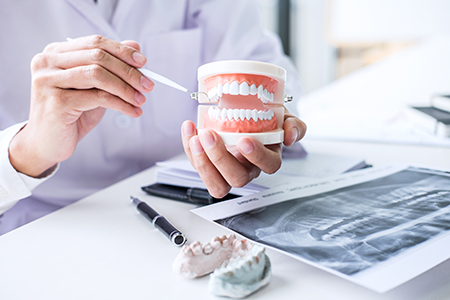
Advances in dental materials and laboratory techniques have made tooth replacement more predictable and natural-looking than ever. While dental implants and fixed bridgework provide long-term, non-removable options for many patients, removable dentures remain an important and flexible choice for restoring function and confidence when teeth are missing.
At Pleasant Dental, we design dentures using high-quality materials and careful craftsmanship to deliver comfortable fit, natural appearance, and reliable function. Our team balances modern technology with practical experience to produce prostheses that support clear speech, comfortable chewing, and a refreshed facial profile.
We focus on solutions that reflect each patient’s needs and daily life. Whether someone needs a partial appliance to replace a few teeth or a complete denture for a full arch, our approach prioritizes comfort, durability, and an outcome that feels like a true part of your smile.
Why missing teeth matter for health, appearance, and everyday life
Tooth loss affects more than just the way a smile looks. Missing teeth can make it harder to chew certain foods, alter speech patterns, and create self-consciousness in social situations. Over time, the absence of teeth can also lead to gradual changes in facial support and jawbone volume that influence overall appearance.
When a tooth is lost, the surrounding teeth can shift toward the empty space, creating bite problems and uneven forces that compromise the remaining dentition. These changes increase the likelihood of further tooth breakdown and can make future treatments more complex. Replacing missing teeth helps preserve the alignment and function of the whole mouth.
Addressing tooth loss sooner rather than later helps maintain oral function and long-term tissue health. Both partial and full removable dentures are proven ways to restore chewing ability and facial support while offering a non-permanent, approachable treatment path for many patients.
What a denture does and how it works with your mouth
Dentures are removable prosthetic appliances that sit on the gums and replace missing teeth with lifelike artificial teeth set in a gum-colored base. They are designed to restore the basic functions of a complete dentition—chewing, speaking, and smiling—while supporting the soft tissues of the face.
Unlike fixed restorations, dentures are taken out for cleaning and overnight rest. This removable quality enables easier hygiene for both the appliance and the underlying tissues, and it allows for periodic adjustments as oral anatomy changes over time.
Modern denture materials and fabrication methods allow for realistic tooth shapes and shades, refined occlusion (bite), and a snug base that minimizes movement during daily activities. For many patients, a well-made denture can significantly improve comfort and confidence.
Selecting the right denture type for your smile
Choosing between a partial and a full denture is based on how many natural teeth remain, the condition of those teeth, and the overall health of the gums and jawbone. A careful exam helps determine the most practical appliance and whether additional procedures—such as extractions or tissue reshaping—are needed first.
Our team evaluates jaw relationships, bite dynamics, and aesthetic goals to recommend a solution that balances stability and comfort. For some patients, a removable partial is the best path; for others, a complete denture provides the most effective restoration when an entire arch is missing.
When necessary, we also discuss ways to increase denture stability and retention, including attachments and implant-assisted options that combine the advantages of removable and fixed prosthetics.
Complete (Full) Dentures
Full dentures replace every tooth in the upper or lower arch—or both—and are customized to restore the look and function of a natural smile. The design considers lip support, facial balance, and the patient’s individual bite to create an appliance that integrates comfortably with daily life.
Immediate and staged full-denture approaches
An immediate denture can be placed the same day as extractions so a patient does not remain without teeth during healing. This approach provides immediate aesthetics and function but often requires follow-up adjustments as tissues remodel. In contrast, conventional full dentures are fitted after healing is complete, which can yield a more precise long-term fit.
-
Overdenture
An overdenture gains additional stability by fitting over retained tooth roots or specially placed abutments. Preserving natural roots where feasible can help maintain bone and improve support for the prosthesis.
-
Implant-Supported Dentures
Implant-supported dentures attach to small titanium posts anchored in the jaw. These connections greatly enhance retention and chewing efficiency while allowing the denture to remain removable or, in some designs, to be fixed in place.
Removable Partial Dentures
Partial dentures replace one or several missing teeth when other healthy teeth remain. They typically connect to the mouth using clasps or precision attachments and work to restore tooth position, prevent drifting, and reestablish a balanced bite.
Partial frameworks are available in a range of materials—from traditional cast metal to flexible resins and hybrid composites—offering different combinations of strength, comfort, and aesthetic discretion. The choice depends on the patient’s needs and the specific anatomy of the mouth.
Throughout the design process, our clinicians focus on producing a partial denture that integrates smoothly with the remaining teeth and preserves oral health while restoring the smile’s appearance and function.
How we plan and fabricate dentures that perform
Creating a successful denture requires a blend of careful clinical planning, precise measurements, and ongoing communication with the dental laboratory. Our procedure begins with a comprehensive exam, medical and dental history review, and diagnostic imaging when indicated to assess bone and tissue contours.
We take impressions and record bite relationships to ensure the teeth will meet correctly and support comfortable chewing. Tooth shape, size, and shade are selected with patient input so the final prosthesis complements facial features and personal preferences.
Occasionally, preparatory treatments are needed to optimize tissue health or to perform minor reshaping so the denture will seat properly. Throughout the process, we schedule try-ins and adjustments to fine-tune fit, appearance, and function before delivering the final appliance.
Adjusting to your new denture and caring for it long term
At Pleasant Dental, patient comfort and education are central to care. When you first receive a new denture, it’s normal to experience a short adjustment period. Speaking, swallowing, and chewing often feel different at first, but most patients adapt within days to a few weeks with regular use and simple practice.
-
Getting comfortable with wear
New dentures can create minor sore spots as tissues adapt. Wearing the denture as recommended and returning for timely adjustments allows us to address pressure points and improve fit before irritation develops.
-
Temporary changes in saliva and speech
An increase in saliva production or slight changes in speech are common early responses. These effects typically subside as your mouth becomes accustomed to the appliance—reading aloud and practicing common words can speed adaptation.
-
Eating with confidence again
Start with softer foods and cut items into small pieces, chewing on both sides to stabilize the denture. As strength and coordination improve, most people return to a varied, balanced diet with renewed ease.
-
Cleaning and daily maintenance
-
Clean your denture daily with a soft brush recommended for dentures and rinse after meals to remove debris. Soak the appliance overnight in water or a recommended cleaner to maintain hygiene and material integrity.
-
Brush remaining natural teeth, gums, tongue, and palate to support tissue health and reduce the risk of irritation or infection beneath the denture.
-
Remove dentures at night to allow the gums and bone a period of rest—this practice supports tissue health and long-term comfort.
-
Improving stability when needed
For some patients, adhesive, attachments, or implant-retained connections can provide meaningful improvements in comfort and chewing ability. We review these options when greater retention is important to a patient’s lifestyle.
-
Routine follow-up and relines
Regular dental checkups let us monitor the fit and condition of the denture, examine remaining teeth, and detect any changes in oral tissues. Over time, relines or adjustments may be needed to preserve comfort as the mouth naturally remodels.
Our team is committed to guiding patients through every step—from initial consultation to long-term maintenance—so a denture becomes a durable, functional, and confident part of daily life. If you have questions about whether a partial or full denture is right for you, please contact us for more information.